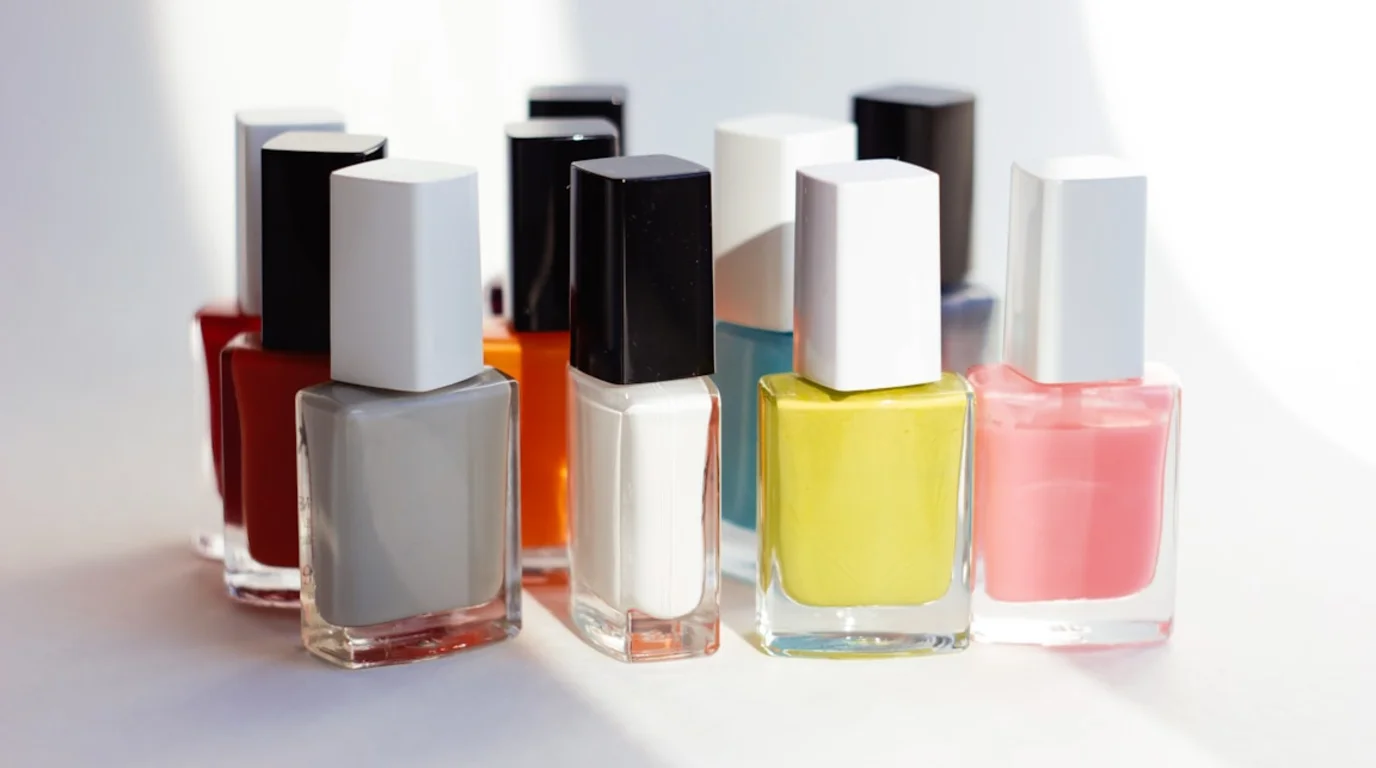
Product costs eat into nail salon margins faster than most owners realize. The average nail professional spends roughly $200 per month on supplies, and salons with multiple techs can easily hit $2,500 or more. That spending is necessary. Unmanaged spending is not.
Calculate Your Nail Product Cost Per Service
You cannot manage what you do not measure. Every service you perform consumes a specific dollar amount in product, and most salon owners have never calculated it.
The rough benchmarks:
- Basic manicure: $2 to $4 in polish, files, cotton, cuticle oil, and disposables
- Gel manicure: $3 to $5 in base coat, color gel, top coat, prep supplies, and lamp wear
- Full acrylic set: $4 to $7 in monomer, polymer powder, primer, forms or tips, and finishing product
- Dip powder manicure: $3 to $6 in base, activator, dip powder, and top coat
- Deluxe pedicure: $5 to $9 in scrub, mask, lotion, polish, and disposable liners
These numbers look small individually. Multiply them by 15 to 25 services per day across your team and the total adds up fast. A salon doing 400 services a month at an average product cost of $5 spends $2,000 monthly on supplies alone.
How to calculate your own numbers: Divide the bottle price by its total volume to get a per-ml cost, then multiply by how much you use per service. A $16 bottle of CND Shellac with 7.3 ml costs about $2.19 per ml. At 0.5 ml per application, that is $1.10 in color gel alone per client. Do this exercise once for your five most popular services.
Reduce Nail Product Waste Without Slowing Down
Product waste is one of the easiest margin leaks to fix because it requires no additional spending.
Dispense less, more often. Nail techs tend to pour out more monomer than they need or squeeze out too much gel. Train your team to work with smaller amounts and grab more if needed. Pouring 10 ml of monomer when you need 6 ml means 40% waste on every acrylic service.
Cap everything immediately. Monomer evaporates. Gel polish thickens when exposed to ambient light. Acetone disappears into the air. Every uncapped bottle during a service is money evaporating alongside the product. The average shelf life of opened nail products is 12 to 24 months, but exposure to air and light accelerates degradation well before that window closes.
Use dappen dishes properly. Pour small amounts of monomer into your dappen dish rather than working directly from the bottle. A covered dappen dish loses far less product to evaporation during a 45-minute acrylic set than an open one.
Track what you throw away. For one week, have each tech set aside empty bottles, failed nail tips, and unused mixed product. You will find patterns: one tech consistently mixes too much activator, another goes through acetone at twice the rate. Those patterns are coachable.
Wholesale vs. Retail: Where to Buy
Buying wholesale can save you 10% to 25% per unit compared to retail, but only if you buy strategically.
Where the savings are real:
- High-volume consumables. Monomer, acetone, cotton, disposable files, and nail forms. A gallon of acetone from Sally Beauty runs around $8 to $12 versus $5 to $7 for a quart at retail. The per-ounce cost drops roughly 40%.
- Gel polish in bulk. Distributors like Nail Superstore sell professional gel lines at 15% to 20% below salon retail. If your team uses 8 to 10 bottles of the same base and top coat per month, buying cases of 6 or 12 pays off fast.
Where wholesale backfires:
- Trendy colors. That limited-edition glitter gel looked great in the catalog, but if clients only request it twice a month, the bulk discount is wasted on product that expires on your shelf.
- Products with short shelf life. Nail glue (cyanoacrylate) has a shelf life of roughly 6 to 12 months once opened. Buying 24 tubes wholesale when you use 3 per month means half of them degrade before you open them.
- New brands you have not tested. Never bulk-buy a product your team has not used on at least 20 clients. Application quality, cure time, and longevity vary wildly between brands even within the same product category.
Smart supplier strategy: Keep two to three suppliers in rotation. Use your primary distributor for core products where you get volume discounts. Check pricing from CND, OPI, and Young Nails directly, as manufacturer-direct accounts sometimes beat distributor pricing on their own lines.
Comparing Nail Product Brands: Price vs Performance
A $22 bottle of builder gel is not automatically superior to a $14 one. What matters is coverage per application, cure reliability, and longevity on the client’s nails.
Test before you commit: use Brand A on one hand and Brand B on the other for 10 clients over two weeks. Track which requires fewer coats, cures more consistently, and lasts longer at the two-week check-in. If the $14 gel performs within 90% of the $22 gel but costs 36% less, the math is clear.
Products worth paying more for: base coats, builder gels, and acrylic monomers. These are the structural foundation of every service. Cheap monomer yellows faster and creates weaker bonds. Products where mid-range works fine: color gels, dip powders, and most topcoats.
Proper Nail Product Storage to Prevent Waste
Poor storage degrades products before you use them, which is the same as throwing money away.
Temperature. Store all nail products between 70 and 77 degrees Fahrenheit. Heat accelerates chemical breakdown in gels and acrylics. Never store product near windows, heating vents, or in back rooms without climate control.
Light. UV and ambient light cure gel products slowly over time, even inside the bottle. Store gel polishes in a closed cabinet or drawer, not on an open display rack near a window.
Organization. Use FIFO: first in, first out. When new stock arrives, place it behind existing inventory so older product gets used first. Label each bottle with the date you opened it.
Refrigeration for specialty items. Unopened nail adhesives can have their shelf life doubled by refrigeration below 40 degrees. Once opened, store at room temperature and use within the manufacturer’s recommended window.
Build a Nail Salon Inventory Tracking System
Tracking inventory does not require expensive software. A spreadsheet works if you use it consistently. For each product, record the purchase date, price paid, date opened, estimated services per unit, and reorder threshold.
Set a weekly 15-minute check on your five highest-volume products. Do a full count monthly. The FIFO approach combined with regular counting eliminates two common failures: expired product sitting behind fresh stock, and emergency reorders at retail price because you ran out mid-week.
The Bottom Line
Product cost management is not about buying the cheapest supplies or rationing gel polish. It is about knowing your numbers, eliminating waste, buying at the right price points, and storing product so it lasts.
A salon that spends $2,000 per month on product and wastes 15% of it loses $3,600 per year to nothing. Cut that waste to 5% and negotiate modest wholesale discounts, and you recover $2,400 or more annually without changing a single thing about the client experience.
For the bigger picture on salon finances, see our nail salon bookkeeping guide. And if you are still building your pricing strategy, knowing your true product cost per service is the first step to setting prices that protect your margins.