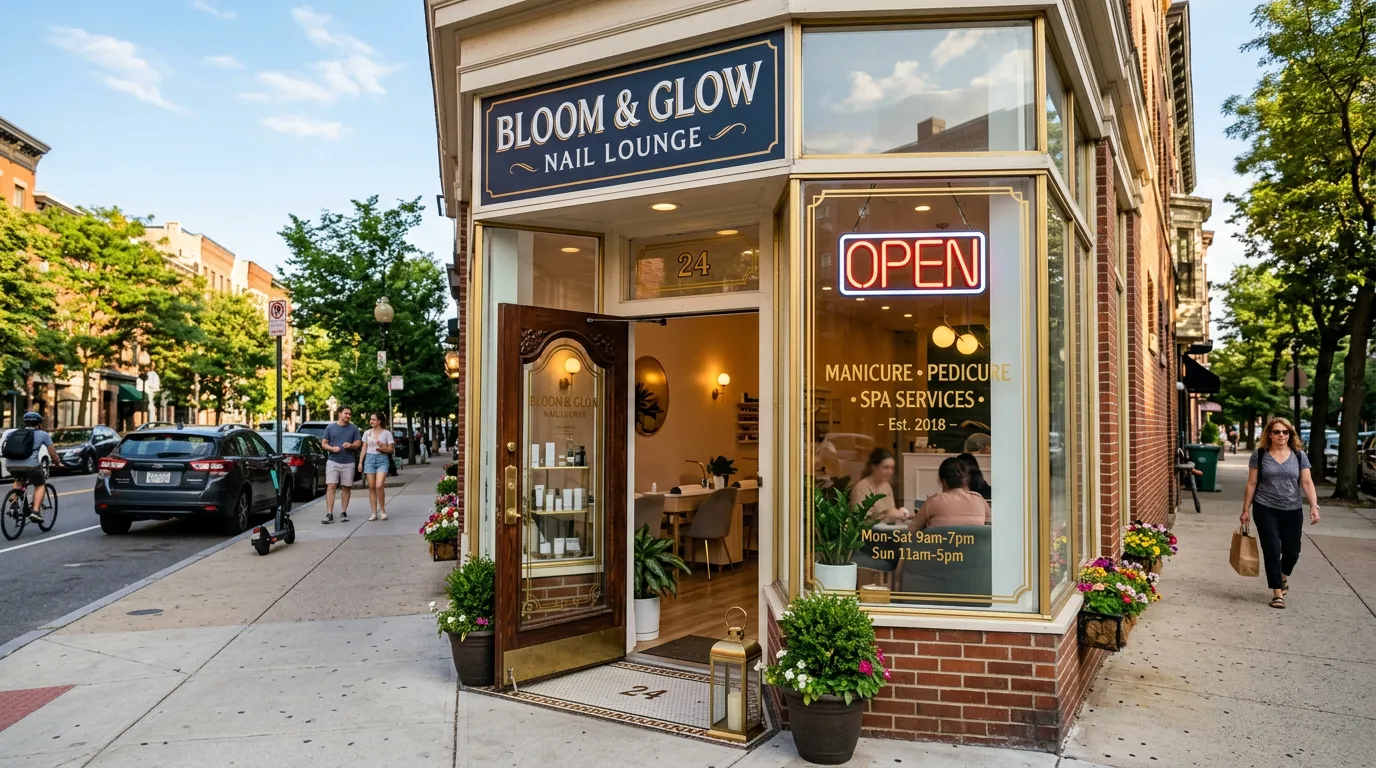
The U.S. nail salon industry hit $12.9 billion in revenue in 2024, growing at 7.8% annually over the past three years. A chunk of that money walks in off the street with no appointment. The question every salon owner faces: should you let it in, or protect your schedule?
The answer is not binary. A strict appointment-only policy leaves revenue on the table. A full walk-in model creates chaos. The best-performing salons run a hybrid, and the data supports it.
Why Nail Salons Should Accept Walk-Ins
Walk-in clients represent impulse demand. Someone passes your storefront, sees the “Walk-Ins Welcome” sign, and decides their nails need attention right now. In high-traffic locations near shopping centers, restaurants, or office buildings, this foot traffic can account for a meaningful share of daily revenue.
Salons located in areas with large populations and high foot traffic are more likely to benefit from walk-in volume. If your salon sits on a busy street or in a strip mall with steady pedestrian flow, turning away walk-ins means turning away money.
Walk-ins also serve as a client acquisition channel. About 58% of nail salon clients are new or one-time visitors. Many of those first visits start as walk-ins. If the experience is good, a percentage convert to regulars. The cost of acquiring them is essentially zero, compared to the $50 to $127 per client that digital marketing typically costs in the beauty industry.
Why Appointment-Only Works Better for Some Salons
Here is where the problems start. A nail technician can handle 6 to 12 clients per shift, depending on service complexity. A basic manicure takes 30 minutes. A full set of acrylics with nail art can take 90 minutes or more. When a walk-in arrives expecting a complex service during a fully booked afternoon, something has to give.
The costs of unmanaged walk-ins:
- Appointment delays. Squeezing in a walk-in pushes back scheduled clients. Those clients booked in advance specifically to avoid waiting. Making them wait erodes trust and increases the chance they do not rebook.
- Technician burnout. Most salons operate with 3 to 5 technicians per shift. Adding unplanned work to an already full day leads to rushed services, skipped breaks, and staff turnover.
- Inconsistent service quality. When technicians are rushed, detail work suffers. Gel applications cure unevenly. Cuticle work gets sloppy. The client who walked in gets a mediocre experience, and the booked client who got bumped gets a worse one.
- Lower retention. Online first-time bookings retain at roughly 78% for a second visit, compared to about 39% for walk-ins. Walk-in clients are less committed by nature. Building your business model around them means building on a less stable foundation.
No-show and cancellation rates in nail salons run between 10% and 18% daily. That means on a busy day with 40 appointments, 4 to 7 slots open up unexpectedly. Walk-ins can fill those gaps, but only if you have a system for it.
The Hybrid Walk-In and Appointment Model
The most practical approach is a hybrid policy that protects your scheduled clients while capturing walk-in revenue during downtime. Here is how it works:
Define your walk-in windows. Look at your booking data from the past 3 to 6 months. Identify the time slots that consistently have open chairs. For most nail salons, these are:
- Weekday mornings (opening to 11 AM)
- Early weekday afternoons (1 PM to 3 PM)
- The last 60 to 90 minutes before closing
During these windows, accept walk-ins freely. During peak hours (typically weekday evenings and all day Saturday), accept walk-ins only if a technician has an open slot or a no-show opens one up.
Assign a walk-in rotation. Designate one technician per shift as the walk-in handler. This person takes scheduled appointments but is the first to pick up walk-in clients when gaps appear. Many salons already use a daily rotation system to distribute clients fairly among technicians. Adding a walk-in priority layer to this rotation keeps things organized.
Limit walk-in service menus. During busy periods, offer walk-ins only quick-turnaround services: basic manicures, polish changes, simple gel applications. Reserve the 60-plus-minute services (acrylics, intricate nail art, full pedicure combos) for appointments. This lets you serve the walk-in without disrupting the schedule.
Signage That Sets Expectations
Your walk-in policy only works if clients know what it is before they sit down. Clear signage prevents frustration on both sides.
Window signage. A simple “Walk-Ins Welcome” sign draws foot traffic, but it creates problems if you cannot actually take walk-ins at that moment. A better version: “Walk-Ins Welcome / Appointments Recommended” or “Walk-Ins Welcome / Wait Times May Apply.” This sets the expectation that walking in is an option, not a guarantee.
Door or lobby sign. Post your walk-in windows directly: “Walk-ins accepted Monday through Friday, 9 AM to 11 AM and 1 PM to 3 PM. All other times, appointments recommended.” Clients appreciate knowing the rules upfront.
Digital presence. Update your Google Business Profile, website, and social media bios with the same policy. A growing number of clients research salons online before visiting. If your website says “walk-ins welcome” with no caveats, expect frustrated clients who arrive during peak hours and face a 45-minute wait.
What to Do When Walk-Ins Arrive and You Are Full
This is the moment that defines your salon’s reputation. A walk-in arrives, every chair is occupied, and the next opening is two hours away. How you handle it determines whether that person books an appointment for next time or leaves a bad review.
Acknowledge them immediately. Do not let a walk-in stand at the door unnoticed. Even a quick “Hi, welcome in! Let me check our availability” makes the difference between feeling welcomed and feeling ignored.
Give an honest time estimate. “We are fully booked right now, but I can get you in at 3:30. Would that work?” If they cannot wait, offer to book them for another day. Hand them a business card or have them scan a QR code to your online booking page. A tool like Lutily lets walk-ins book themselves on the spot.
Offer a waitlist with a perk. If the wait is 20 to 30 minutes, offer to text them when a chair opens. Sweeten the deal with a small incentive: “If you do not mind the short wait, I will add a free nail art accent to your service.” The cost to you is 3 minutes of technician time. The return is a new client who feels valued.
Never overbook to accommodate a walk-in. The booked client who chose your salon, picked a time, and showed up on schedule is the client you want to keep. Sacrificing their experience for a walk-in is a losing trade every time.
Making the Decision for Your Salon
Your walk-in policy should match your location, clientele, and staffing capacity.
Go heavier on walk-ins if you are in a high-traffic retail area, have more than 4 technicians on shift, and your booking calendar has consistent gaps during weekday hours.
Go heavier on appointments if your technicians specialize in complex, time-intensive services (nail art, structured gel extensions), your clientele books weeks in advance, and your no-show rate is low.
Track the numbers. Monitor what percentage of your weekly revenue comes from walk-ins versus appointments. Track walk-in conversion to repeat client. If walk-ins are generating revenue but not returning, your acquisition is working but your retention is not. If walk-ins are causing appointment delays, tighten your walk-in windows.
The salons pulling ahead in a $12.9 billion market are not picking one model or the other. They are running both, with clear rules, visible signage, and a system that protects the clients who booked while welcoming the ones who did not. If no-shows are eating into your schedule, our guide on reducing no-shows pairs well with a walk-in policy that fills those gaps.